Paper as an Interface
Self-initiated experiment with Kyndro Yang. I led concept and interaction direction; Kyndro led interaction visual direction. We used torn paper as a deliberately rough, unpredictable interface for real-time AI image generation, tracked live through the camera.
Every tear and motion shifts what the model reads from the silhouette—human gesture and machine interpretation stay in open-ended dialogue, neither side fully in control.
Context
Explore whether physical gesture can act as a live prompt for generative image output: paper geometry as a real-time constraint, not a one-off uploaded mask—so control and chance stay coupled during interaction.
Technical implementation
- Capture: Torn paper tracked live via camera; silhouettes drive real-time masks. Stable outlines come from thresholding white paper before generation.
- Model: StreamDiffusion — responsive enough for a tight feedback loop between gesture and frame output.
- Orchestration: Masks feed the generative stack; noise-flow maps and layered 2.5D-style visual treatment add detail and spatial read without pretending full photorealism at interactive speeds.
- Constraints: Interactive latency limits fine detail; trade-off is controllability vs. responsiveness—design pushes continuity of interaction over freezing perfect frames.
Stack: TouchDesigner · StreamDiffusion
Role
Proposed the concept of physical material as a real-time AI generation constraint, defined the technical approach, and built the visual implementation. Kyndro Yang proposed torn paper as the medium and shaped the visual direction and narrative framing.
Proof
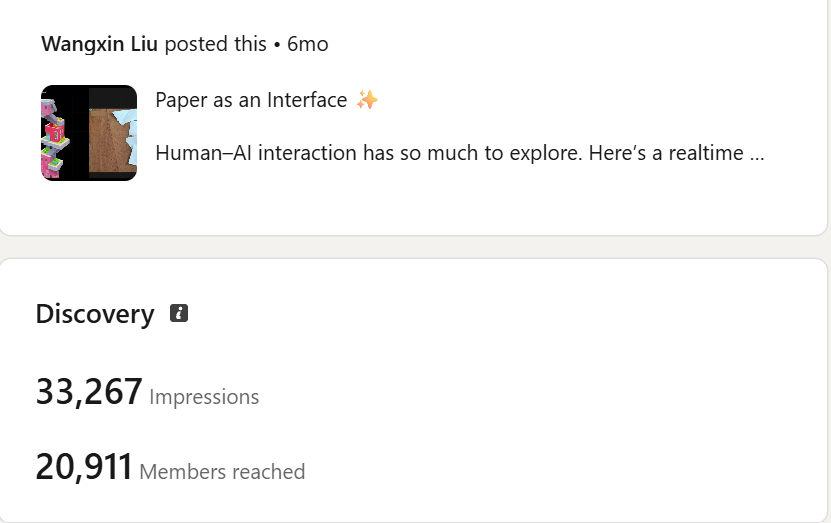
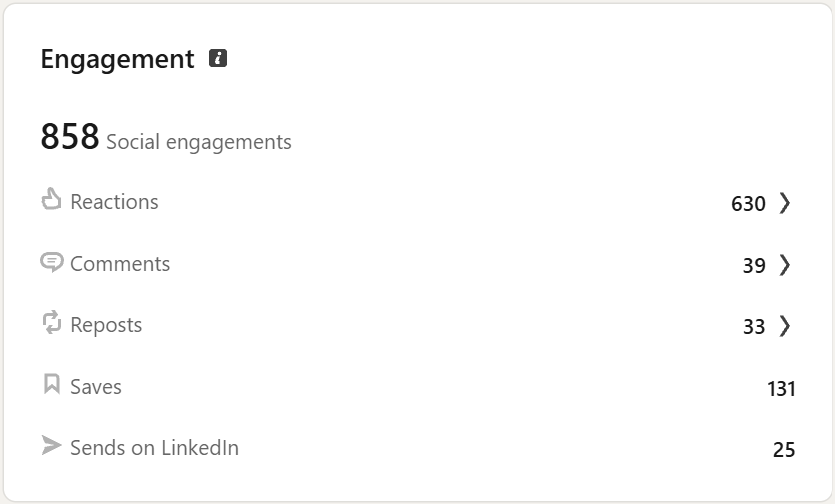
Public post analytics on LinkedIn for this self-initiated R&D piece: 33,267 impressions, 20,911 members reached, and 858 social engagements (including 630 reactions, 39 comments, 33 reposts, 131 saves, and 25 sends).
What’s next
Projection mapping onto the paper surface so generated imagery lands on the same material the body is shaping—closing the loop between input site and output.